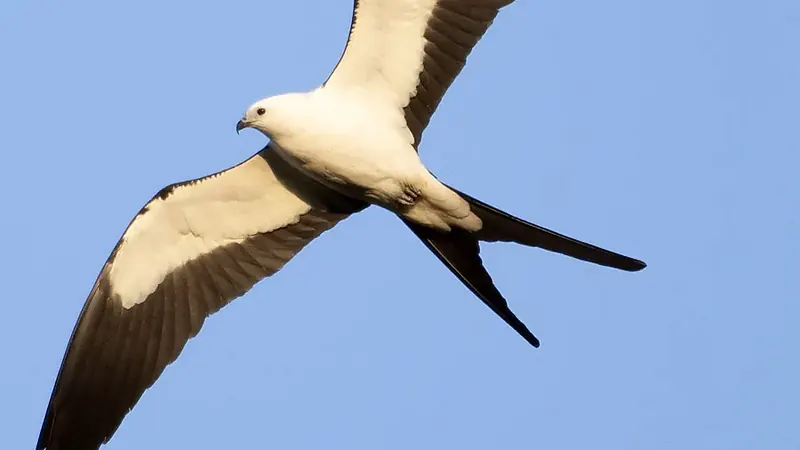
Early records say swallow-tailed kites were commonly seen over the islands. Kites once lived as far north as Minnesota. But declines in the early nineteen hundreds left only a fraction of that range occupied. The reasons for the decline of this black and white raptor are uncertain. They likely include habitat loss and illegal shooting.
Kites now nest only along major river systems in the Southeast, with most in peninsular Florida. After breeding they migrate through Central America. Most of the United States population may winter in central Brazil. Estimates for the current United States population run from eight hundred to one thousand one hundred fifty pairs.
Before Georgia's kite initiative began in nineteen ninety-seven, there were no documented nests in the state. More than seventy-five nests have since been found. All but one of those nests are on private land.
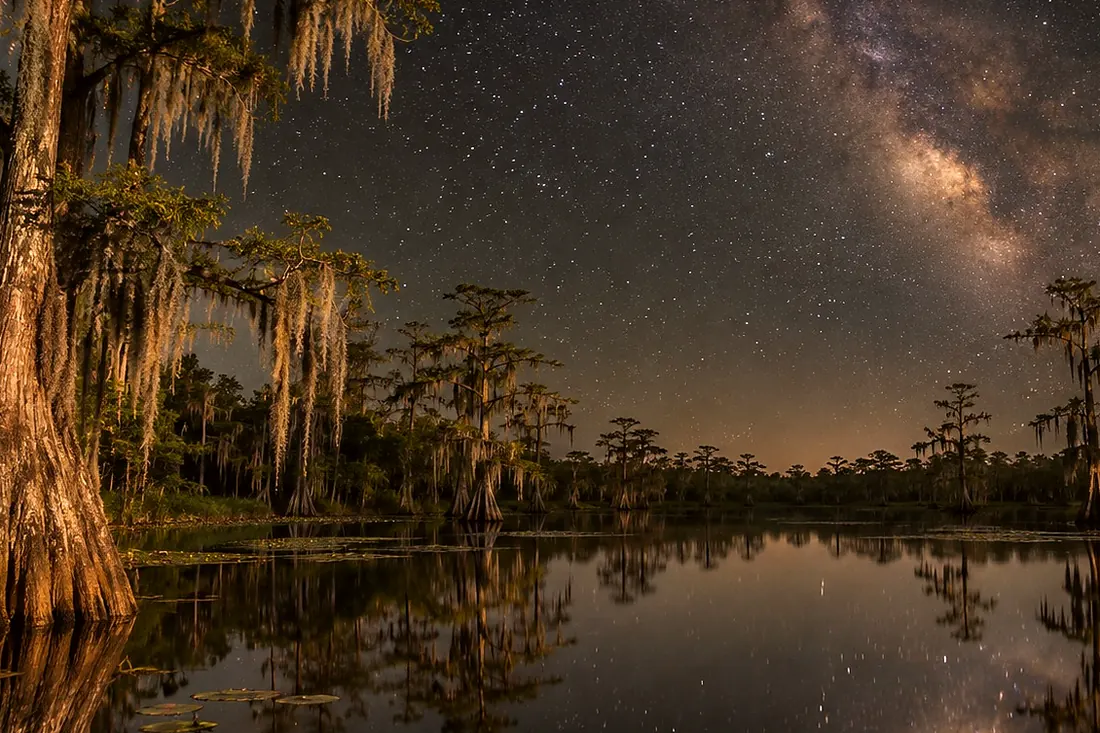
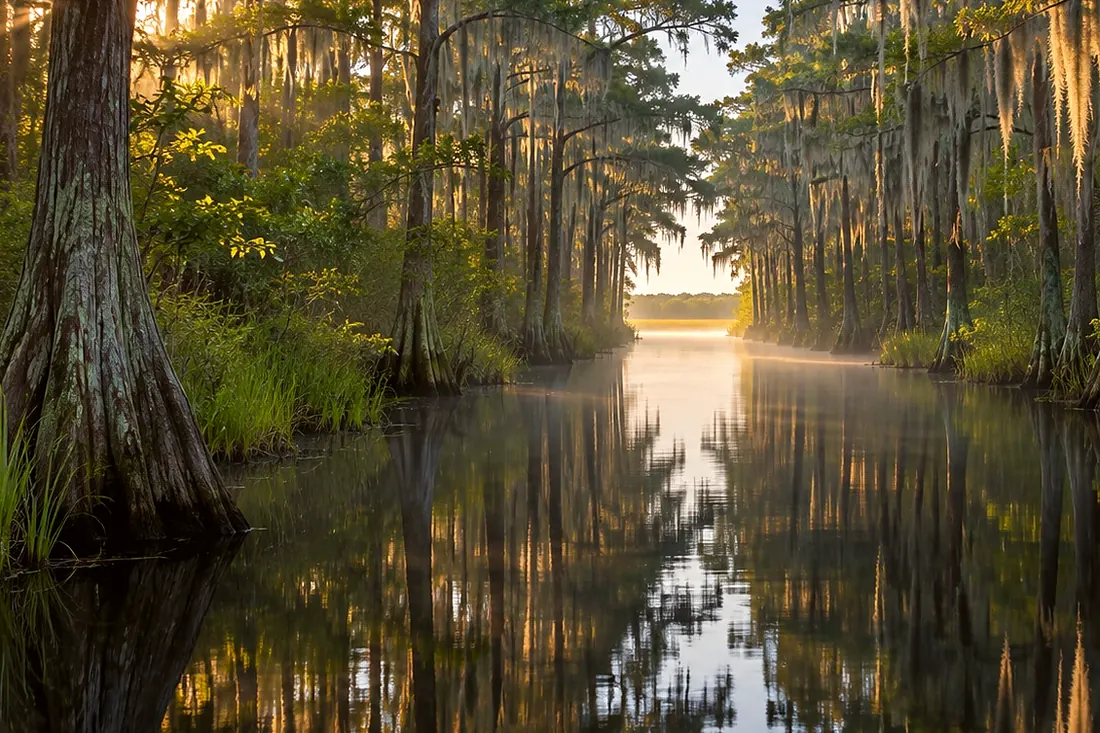
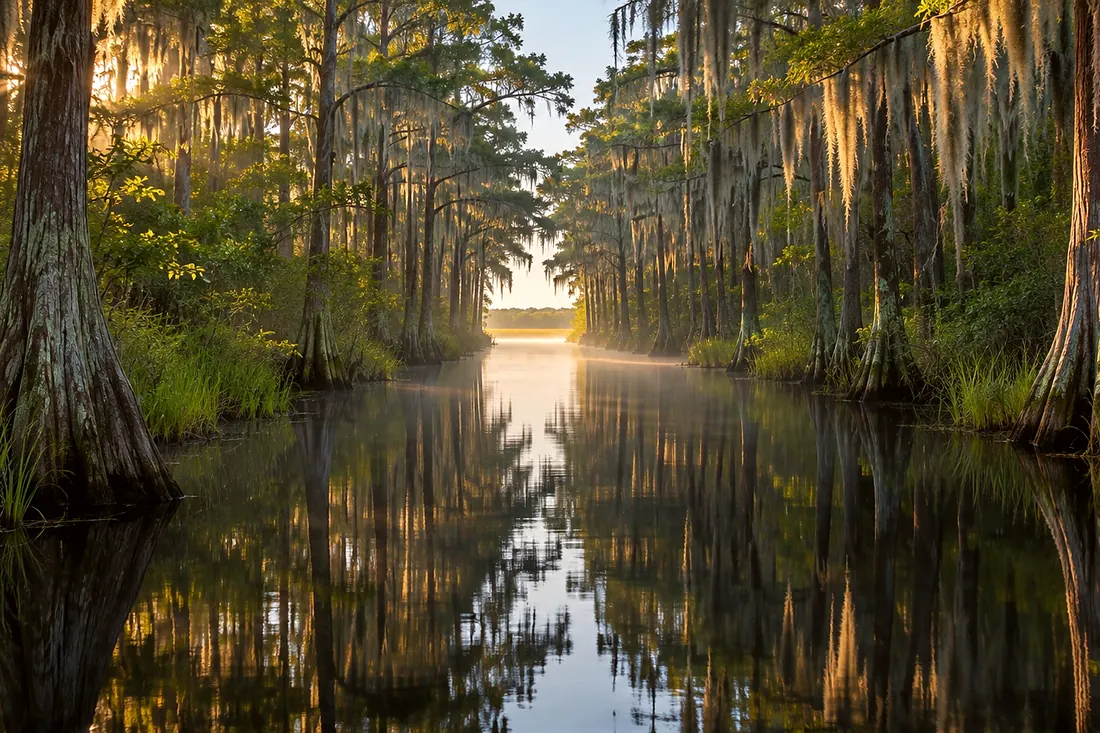
Sightings of swallow-tailed kites over the refuge have been increasing. The state has flown aerial surveys over the swamp, and the refuge takes part in the state's sighting reports. Ospreys and swallow-tailed kites use the wetlands for breeding, foraging and shelter.