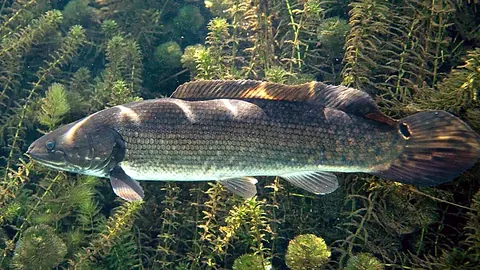
The refuge has thirty-nine fish species. The numbers belong to bowfin and flier. Early reports said flier and bowfin were common in the early nineteen hundreds. Surveys from nineteen ninety-two to two thousand one found them dominant. They made up over eighty-eight percent of the fish collected in the eastern swamp.
The bowfin is considered a living fossil. It is one of two surviving species in a group of fish. That group arose around two hundred fifty million years ago.
The swamp supports an excellent flier and bowfin fishery, and a good one for chain pickerel and warmouth. Fishing is popular along the Suwannee Canal, which runs west from the recreation area.
Largemouth bass and bluegill were stocked after low water in nineteen forty-two, fifty-six and sixty-five. That fishery has declined since the nineteen forties and is rarely encountered now. The swamp probably never supported a strong natural population of those fish. The nomination blames the swamp's low pH.
No true minnows have been found in the swamp. The blackbanded sunfish is the only fish on the Red List that occurs on the refuge. And fish, with invertebrates, are the base of the food chain.