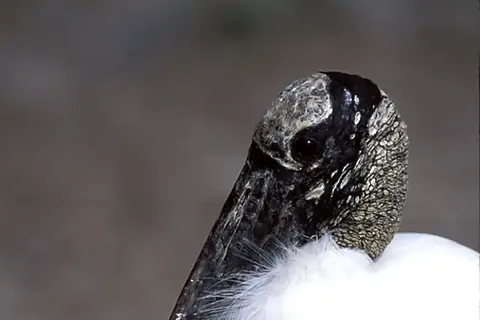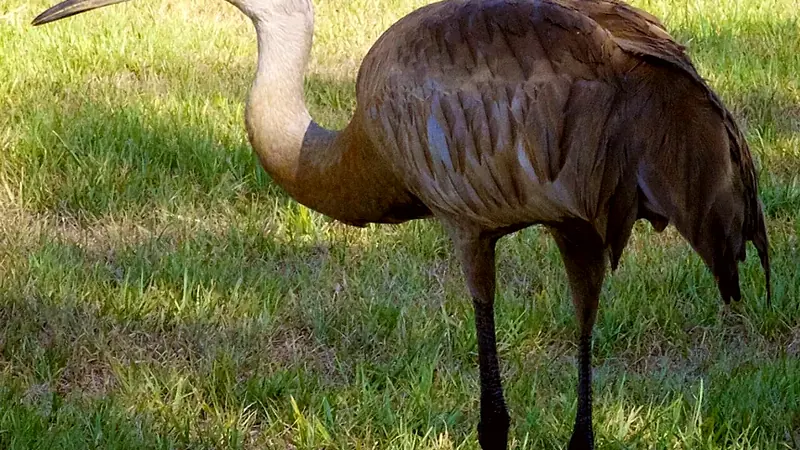
The Florida sandhill cranes live here all year. They do not migrate, and they are isolated from other crane populations in the southeast. In winter, greater sandhill cranes from the upper Midwest and Ontario migrate through or spend the winter with them.
The big flocks arrive in the first or second week of November. Most leave in the first two weeks of February. At times there have been over one thousand birds. They travel from Minnesota and Michigan's Upper Peninsula, by way of a staging ground in northwestern Indiana.
Florida sandhill cranes are commonly seen on the big prairies. Those are Grand, Chesser, Chase, Floyds, Maul Hammock and Sapling. The Chesser Island boardwalk runs out to Chesser Prairie. Wildlife viewing is usually best in the early morning or evening.
In the late nineteen eighties, a count found four hundred three Florida sandhill cranes in the swamp. That was about one hundred sixty pairs. Monthly surveys of the eastern and northern prairies now see an average of about twenty-one between March and October. The counts are different, but the nomination says the resident cranes appear to have declined since the mid-nineteen eighties. It says that needs more study.
The Mississippi sandhill crane is federally endangered, while the Florida sandhill crane is generally considered stable. The refuge still lists the Florida sandhill crane as a species of special conservation concern. And wading birds and the Florida sandhill crane are considered indicators of the health of the wetland system.