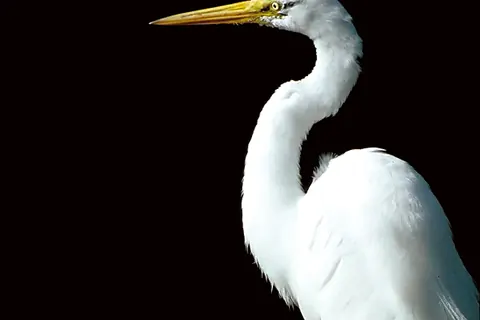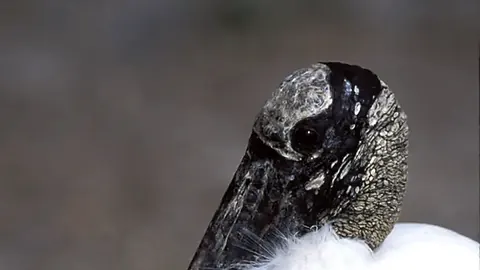
The wood stork is also known locally as wood ibis, iron head or gannet. It is listed as threatened. It was determined endangered in nineteen eighty-four, and reclassified as threatened in twenty fourteen. United States breeding populations have been declining since the nineteen thirties. The main reason is loss of wetland habitat, changed water cycles, and a matching drop in the food supply.
The bird feeds mainly on small fish. Groups of wood storks wade through shallow ponds and stir up the fish. The nomination calls that grope feeding. As the swamp dries, fish crowd into smaller ponds and sloughs, and the storks follow them.
Most wood stork nesting in this region is in Florida and coastal Georgia. The storks move into the Okefenokee in summer and fall, after nesting. They move onto the refuge in growing numbers between June and August. You may see them feeding in groups in Grand, Chesser and Chase Prairies. Where they gather depends on the water that year.
The boardwalk runs out to Chesser Prairie.
Nesting on the refuge was first documented in nineteen sixty-seven, with twelve nests. Nests were seen again in nineteen seventy-six and seventy-seven. None have been reported since.