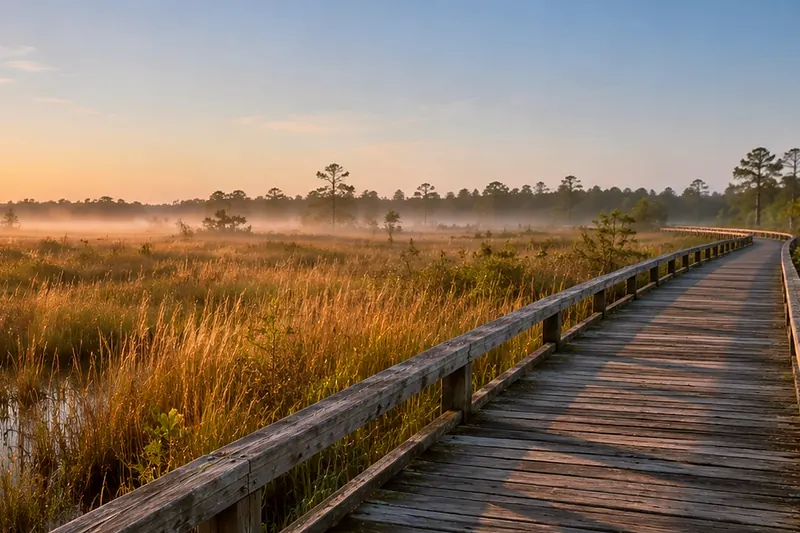
Over the centuries, the swamp was a place to get away. The Nomination Text says who came. It also says the swamp has been a critical source of livelihoods.
Native Americans came to escape colonization, and fugitive slaves came, and later fugitives from the Confederate army. Locals came too, looking for free land to farm and hunt, and a self-sufficient life closer to nature.
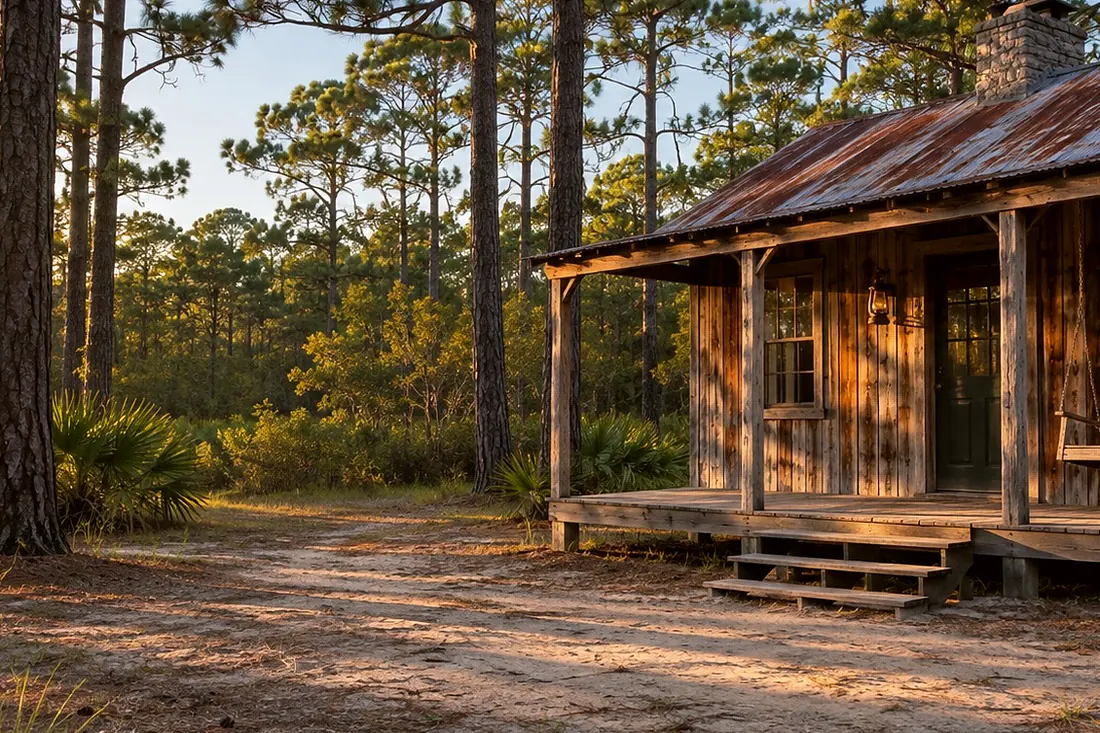
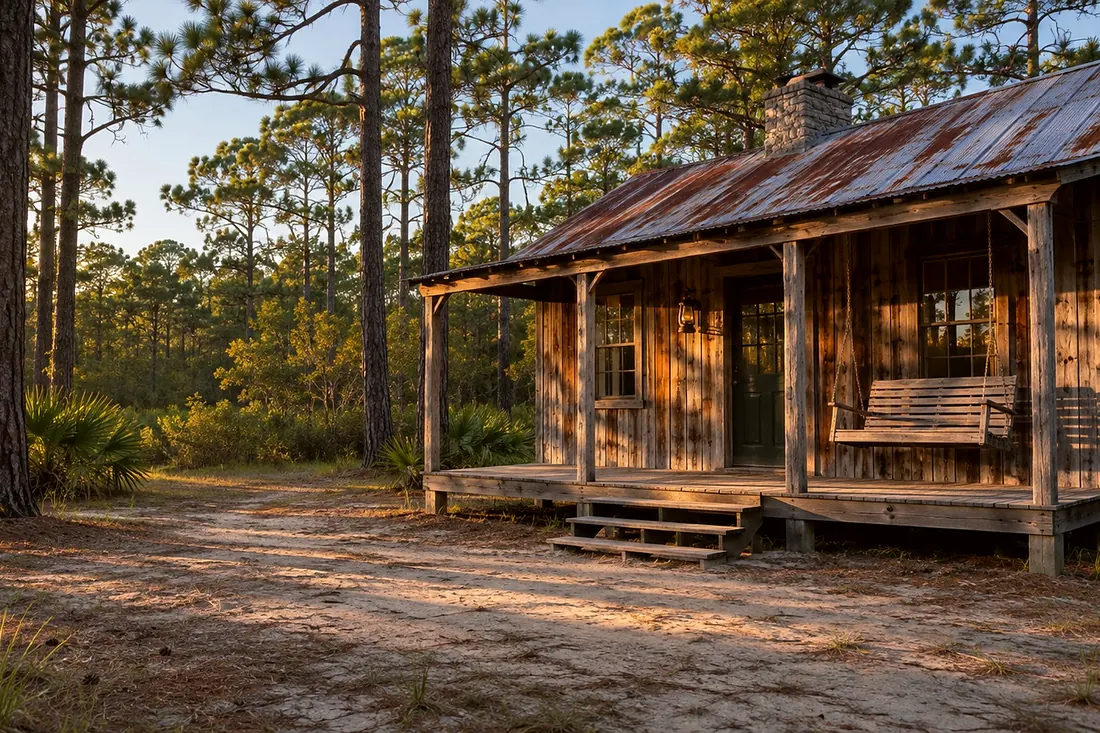
For millennia it was a home to Native Americans. Then it was a home to the swampers, hunting and farming. One historian calls that frontier a hunting and stock-minding society.
Early settlers cut trees for logs, lumber, fence posts and firewood. They cut small patches of timber to clear land for gardens and fields. Roads and settlements began to put barriers in the way of fire on the uplands. Many virgin longleaf pine stands, and their wildlife, were still standing.
Fire was part of the work. Before modern times, low-intensity fires crossed the land about every one to three years. Burning to keep up cattle pasture was done in the dormant season. The dry season, late April through June, is also peak lightning fire season.
The big events of the swamper year were the spring wiregrass burns and the cattle roundups. There were winter drives to the cow houses. And now and then, bear hunts to protect the razorback hogs.
The same historian says the men and women of the frontier fostered a self-sufficient lifestyle. They had a strong sense of independence, and a commitment to family relationships and traditions.
These people weren't visiting. They were living here. That is who we mean when we say swamper. People who made their living out of the swamp.