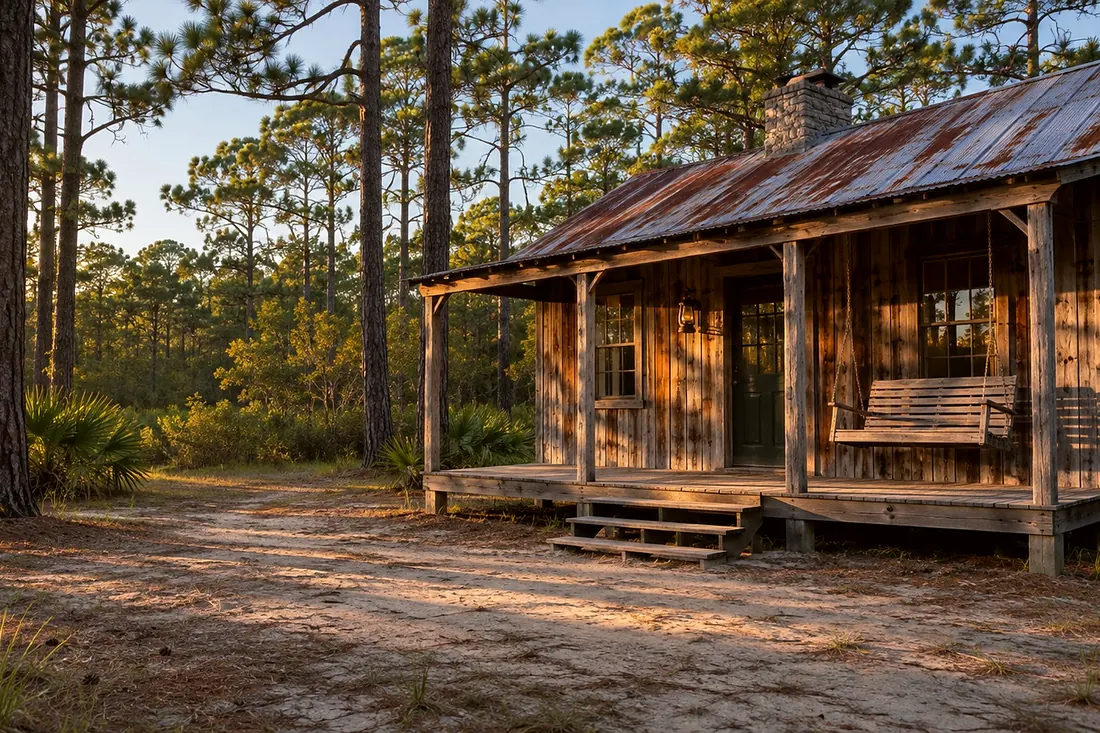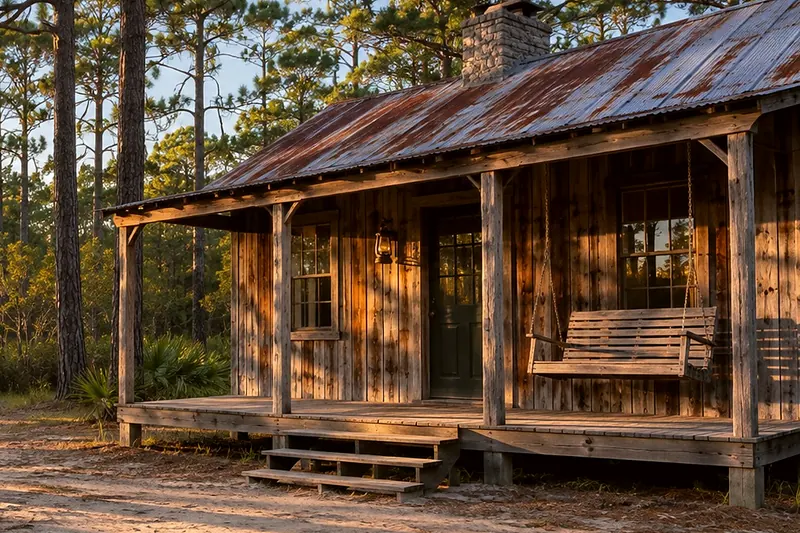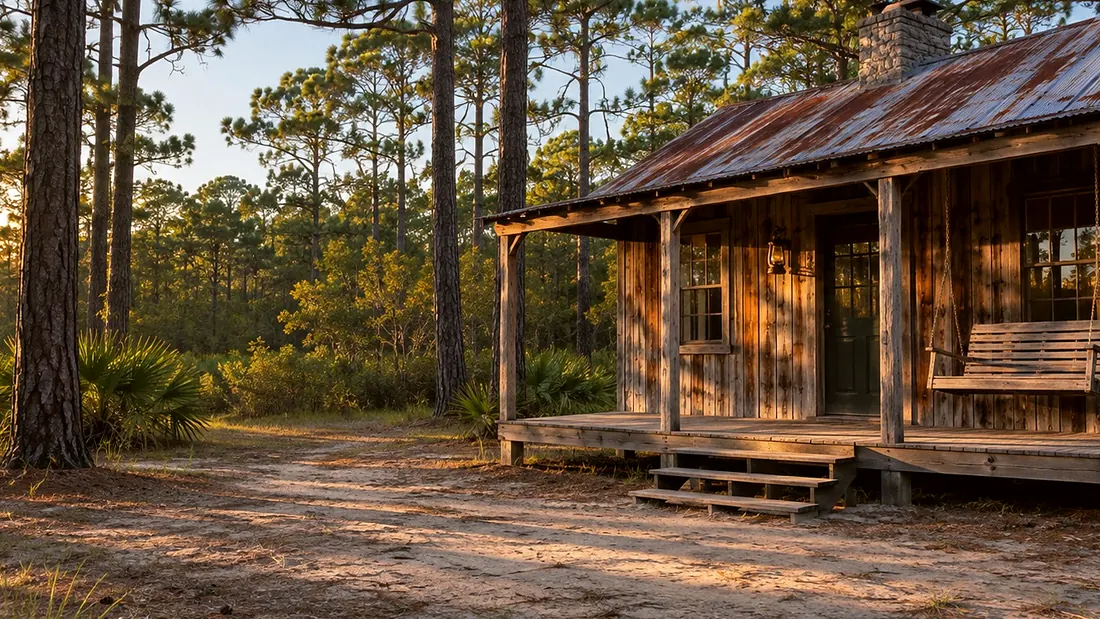
Now the Chessers. The Nomination Text says the Chesser family settled Chesser Island in eighteen fifty-eight. The refuge's own site says the eighteen fifties.
The sources disagree on how big the island was, so I'm leaving the acres out.
The refuge's homestead page says the family hunted, fished, raised livestock, and grew sugar cane and tobacco. They made turpentine too.
Hog butchering and syrup making brought neighbors and relatives together to work and visit. A refuge story says Joe Chesser grew up in the house. He was one of seven children of the fourth generation of Chessers on the island.
In that story, Joe Chesser remembers people coming from everywhere to buy Chesser syrup. The Chessers were especially fond of sacred harp singing. If you're at the homestead, look for the syrup shed. Take your time.
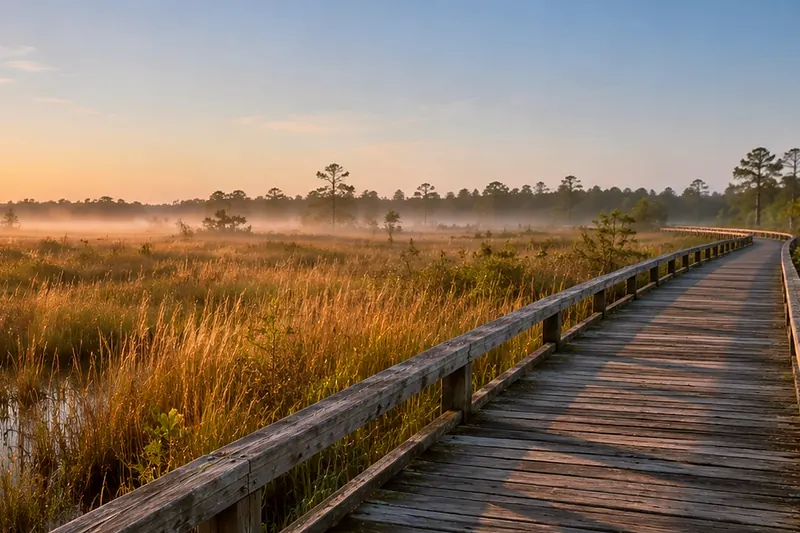
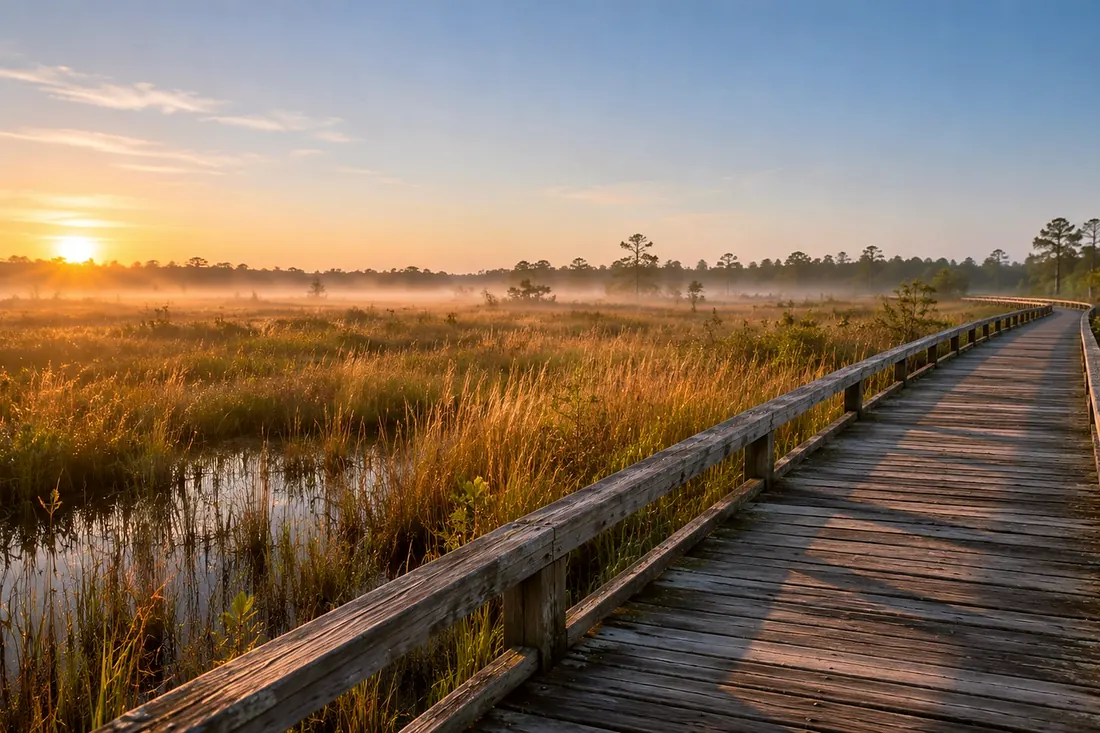
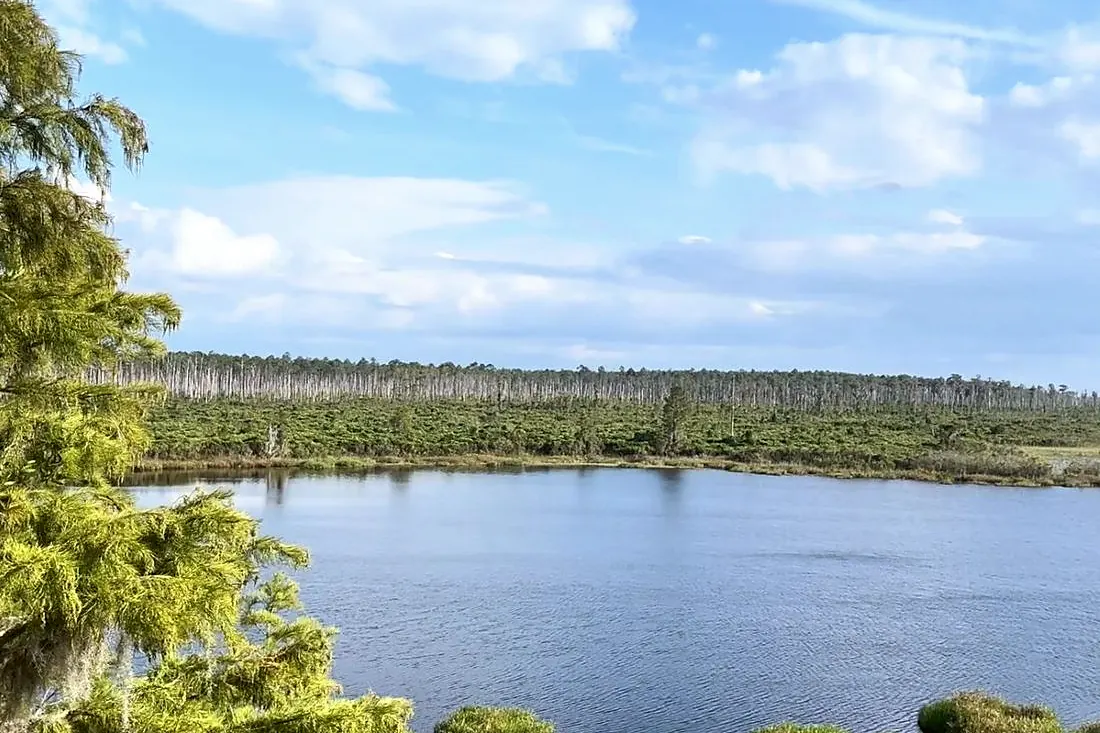
Locals call open shallow-water marsh a prairie. Botanists wouldn't call it that. Prairies are scattered over about a quarter of the swamp. Chesser Prairie is one of them. A water trail runs through it. Francis Harper was the first to record the round-tailed muskrat in Georgia, in nineteen twenty. He found it common on most wet prairies, including Chesser.
The Nomination Text prints a page of old photographs. One is captioned as Tom Chesser's family. Another shows Harry and Tom Chesser sawing down a longleaf pine. And one shows Roxie Chesser at work with a battlin' stick.
Another shows three boats on Chesser's Prairie. One more reads old-time things, mostly hand-made.
The naturalist Francis Harper photographed swamp life from nineteen twelve to nineteen fifty-one. That includes a boat run in Chesser Prairie in nineteen thirty. The caption names Jean Sherwood Harper, Vannie Chesser and Viller Chesser.
By the Nomination Text's own dates, that is a hundred years between the settling and the leaving.